
Welcome to Senator Mike Simmons' Legislative Website
Statement from Illinois General Assembly LGBTQ Caucus & Equality Illinois:
- Details
- Category: Press Releases
FOR IMMEDIATE RELEASE
Statement from Illinois General Assembly LGBTQ Caucus & Equality Illinois:
This week in response to an outcry from a hateful few, Illinois-based insurer State Farm dropped their support for The GenderCool Project, which provides LGBTQ-affirming books to schools across the country on a voluntary basis. We are disappointed State Farm chose to make a knee- jerk concession to bigotry rather than stand in solidarity with our LGBTQ community and our allies who support inclusion. Given the rise of hate crimes and discrimination, decisions like this embolden those peddling hatred and make our society a more dangerous place.
While other states push intolerance and try to roll back the clock on our hard-fought rights, Illinois has been a champion in affirming the dignity our LGBTQ community. We have taken active steps to ensure Illinois schools teach students about the struggles and history of the LGBTQ community, as well as Black history and the history of communities of color broadly. In fact, Illinois recently became the first state to mandate teaching Asian American history.
State Farm promotes itself as 'standing in collaboration with LGBTQ organizations' to 'ensure all communities are valued and treated with respect and dignity.' This latest action to rescind support for GenderCool and the teaching of gender identity to families that want it is in direct contradiction to State Farm's purported values. Unless State Farm reverses its course of action, we will be compelled to call out State Farm's hypocrisy, including, but not limited to, any LGBTQ marketing State Farm plans on doing during Pride month.
Senator Mike Simmons
Majority Leader Greg Harris
Representative Kelly Cassidy
Representative Lamont Robinson
Representative Sam Yingling
Brian Johnson, CEO, Equality Illinois
Simmons Led Mental Health Curriculum Becomes Law
- Details
- Category: Press Releases
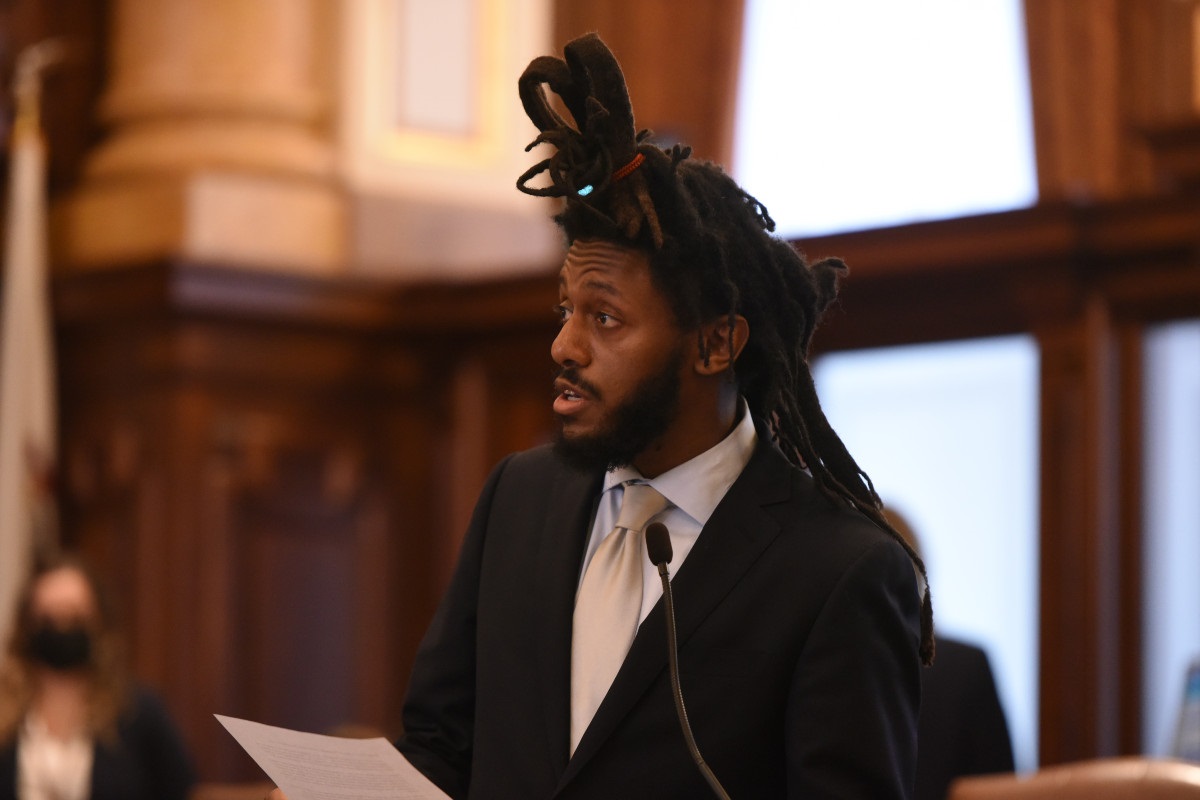 CHICAGO- Youth in Illinois will now begin to receive specialized education on mental health resources after a measure championed by State Senator Mike Simmons (D-Chicago) becomes law.
“This measure addresses a critical gap in the support systems that we need to offer our youth to be able to remain emotionally well,” Simmons said. “Our youth have been so resilient during these past few years, but many of the broader issues amplified by the COVID-19 pandemic have put a severe strain on the mental health of our young people. It’s imperative that we prioritize the mental health and well-being of our young people and center the experiences they are voicing and actually living through.”
Senate Bill 4028 will ensure that the curricula for elementary and secondary schools would be required to include how and where to find mental health resources in the state. The measure helps make students aware of mental health services that are available to them and helps erase the broader stigma behind mental health.
The measure was in part inspired by two of Simmons’ Youth People’s Legislative Councils, where Simmons discussed with young people themselves the issues that are salient to them such as violence and access to mental health as part of his mission to empower young people to become more involved in policy making.
“The struggle to find adequate resources for mental health is an issue that I hear time and time again when I meet with young people in the district I represent,” Simmons said. “I am pleased that we will begin to deliver practical resources to support our youth directly in our schools.”
Senate Bill 4028 was signed into law and takes effect immediately.
###
New Simmons law to create Commission on Children of Incarcerated Parents
- Details
- Category: Press Releases
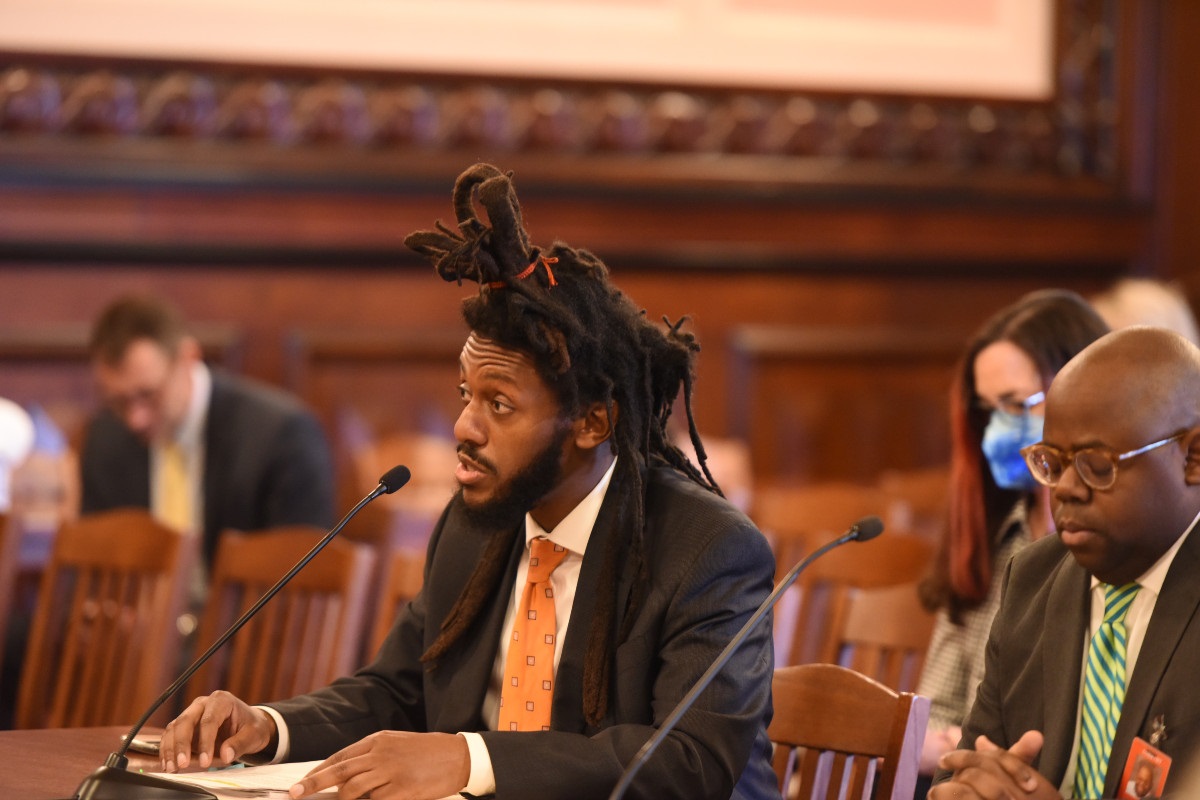 CHICAGO – To better advocate for the interests of children with incarcerated parents in Illinois, State Senator Mike Simmons (D-Chicago) is leading a measure to create the Commission on Children of Incarcerated Parents.
“Today in Illinois, nearly 200,000 children – or one in every 20 – have had a parent in jail or prison. We need to improve the system so that the bond between a parent and their child is honored and strengthened despite the incarceration.”
The Commission, housed within the Department of Human Services, will be tasked with implementing and coordinating the recommendations of the Task Force on Children of Incarcerated Parents within state agencies. The task force, created in 2020 will propose the changes, and the Commission will work with agencies on how to properly implement the changes.
Children whose parents are incarcerated can experience multiple negative effects such as greater mental health symptoms, difficulty with school, housing instability, and overall trauma.
“I am so glad we passed this legislation and look forward to working with House sponsor Rep. Delia Ramirez, Cabrini Green Legal Aid, and the other advocates and stakeholders who worked hard on this effort to implement the commission, said Simmons. We will see this work through so children of incarcerated parents can maintain the most important relationship they have and have their overall needs met across the entire system.”
House Bill 5525 was signed into law on Friday and takes effect on January 1st, 2023.
New Simmons law to strengthen lead mitigation procedures
- Details
- Category: Press Releases
 CHICAGO - To protect communities across Illinois from the deadly impact of lead, State Senator Mike Simmons (D-Chicago) passed a law signed on Friday to strengthen lead mitigation procedures.
“Almost every community across the state is affected by lead in the water supply,” said Simmons. “This law provides an effective and expeditious solution to a decades-long problem that systemically affects low-income communities and communities of color.”
House Bill 4369 will require the Illinois Department of Public Health to follow up on lead mitigation notices by carrying out inspections to ensure the work has been completed. The past law merely permitted an inspection, while this measure will require and enforce lead mitigation efforts.
Lead is a heavy metal and suspected carcinogen that was frequently used in paint, plumbing materials, and many other items before the 1980s. Today, it is mostly found in aging water pipes, contaminated soil, and peeling paint on windows, baseboards, trim, and doors. No amount of lead exposure is considered safe for children or adults.
“Removing lead from all homes and facilities is long overdue and is a critical step toward prioritizing the overall health and safety of people across the state,” Simmons said.
House Bill 4369 was signed into law by Governor JB Pritzker on Friday and takes effect on January 1st, 2023.
More Articles …
Page 60 of 79
Welcome
Thank you for visiting my legislative website. It is my honor and pleasure to represent Illinois’ 7th Senate District.
Here you can find information about the 7th District, access local and state resources, and keep up to date with what’s happening at the Capitol. I hope you’ll find this website useful.
Please feel free to contact me at either of my offices with questions, concerns or ways I can better serve you.
For scheduling requests, please use the form linked HERE.
To reach our office via text message, send a text to 773-945-9979.
To contact us about issues that matter most to you: CONTACT US
Sincerely,

Senator Mike Simmons
7th Senate District


Office Info
District Office
1040 W. Bryn Mawr Ave.
Chicago, IL 60660
(773) 769-1717 (Phone)
(773) 945-9979 (Text)
Springfield Office:
539 Capitol Building
Springfield, IL 62706
(217) 782-8492


eNewsletter Signup